
Saving the Cass Bank Building
Why a St. Louis historic landmark shouldn’t become another empty lot

Welcome to another article from Unseen St. Louis, where I explore the lesser-known history of our city. Today we're looking at the remarkable story behind the old Greyhound station on Cass Avenue, a building that began life as the headquarters of a homegrown St. Louis bank that grew into a global company.
The old Greyhound Bus station at 1450 N. 13th Street (the building with the colorful murals by Cbabi Bayoc) may not be standing much longer.
Earlier this week, I learned that the City of St. Louis has issued an emergency demolition order for the building. The building has a fascinating and important history behind it, so I thought I’d pull together a quick article while it still stands (unlike so many of my subjects that I only get around to exploring after they burn down or get demolished by their owners), in hopes that another outcome for it might be possible.
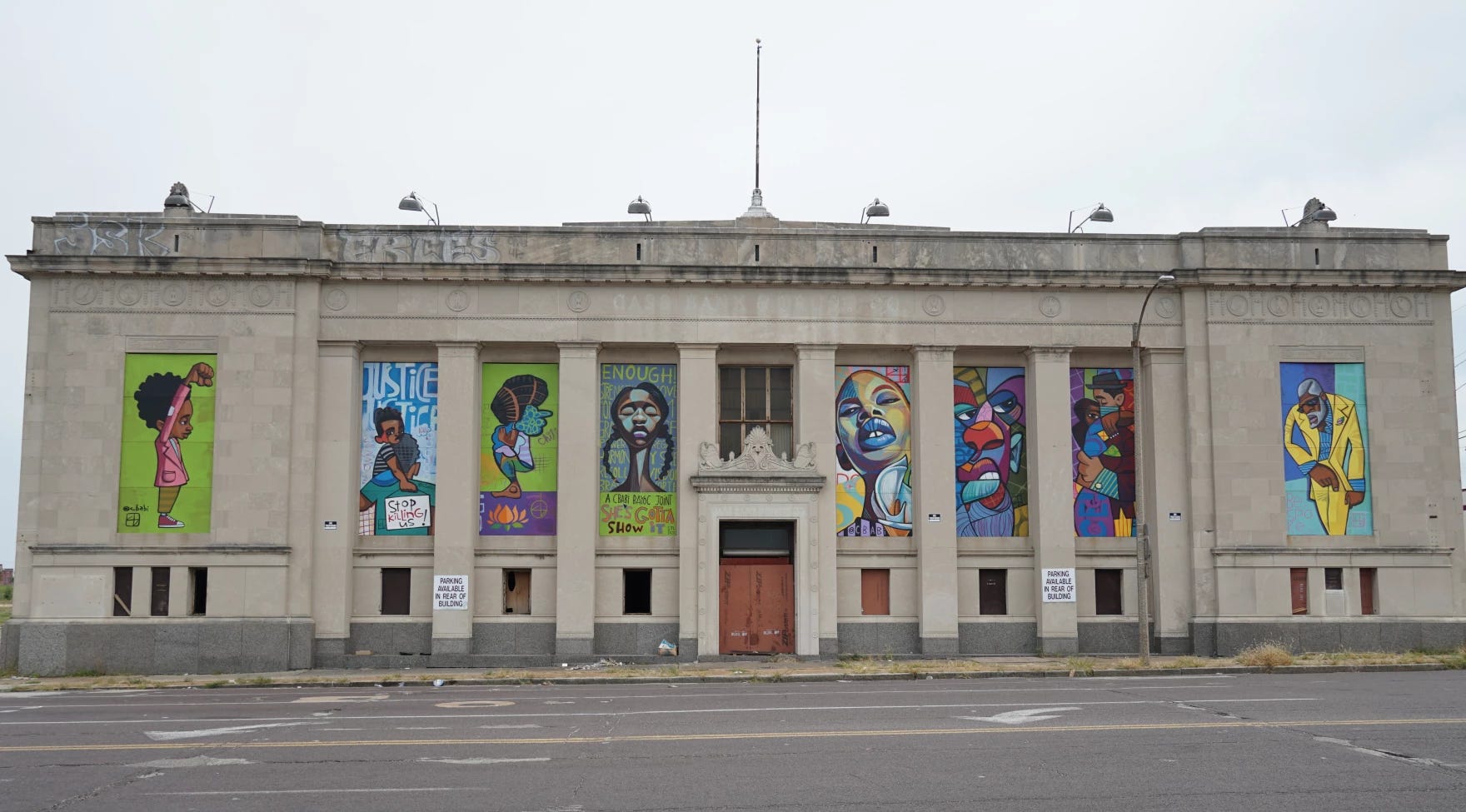
Like so many of the other properties in North City owned by Paul McKee Jr. of NorthSide Regeneration, this building has stood empty for years. As a consequence, it has become a hangout for some of our city’s unhoused population and has been damaged by multiple fires, including one that turned deadly.
Those years of neglect have obscured just how remarkable this building really is. It is one of the city’s finest examples of neighborhood bank architecture and played an important role in the history of Old North St. Louis. It also housed one of St. Louis’s oldest homegrown banks, which continues to operate today. If the wrecking ball comes, the city won’t simply lose another abandoned building. It will lose a tangible piece of its history.
From Neighborhood Bank to Global Company
The story of this building actually begins a few blocks away.
On May 15, 1906, Cass Avenue Bank opened in a rented storefront at 1462 Cass Avenue. Founder Jacob Hellrung and the bank’s first president, George Bothe Sr., could not have anticipated that what they began that day would become a billion-dollar global corporation a century later. By the end of its first day, deposits totaled $51,100, and within a month, those who had provided the bank’s initial capital had already recovered their investment.
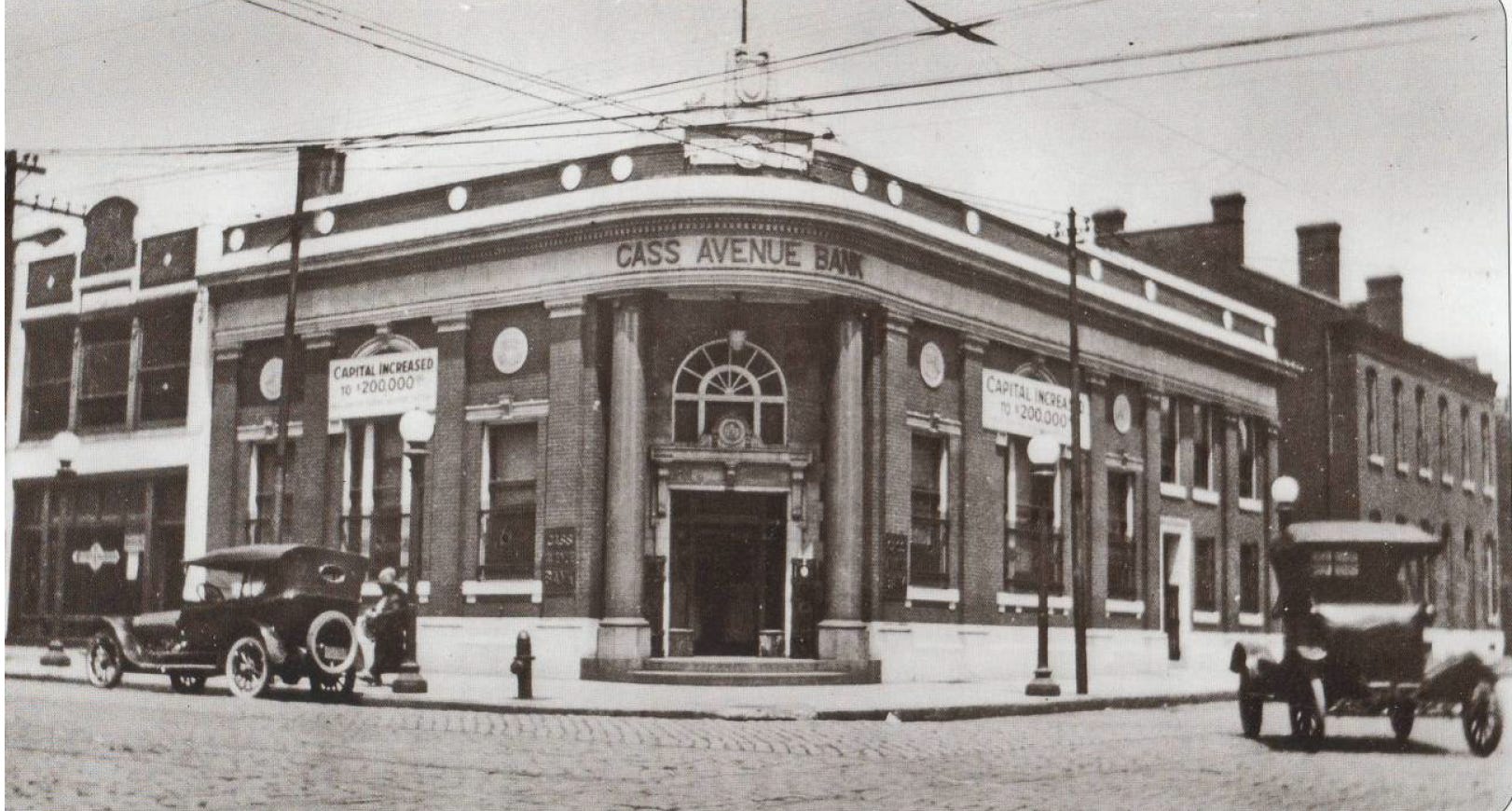
As the bank prospered, it soon outgrew its rented quarters. In 1915, Cass Avenue Bank moved into a new headquarters at 1501 Cass Avenue, an unusual building designed by the St. Louis architectural firm Wedemeyer & Stiegemeyer. Its distinctive curved corner entrance made it one of the more recognizable commercial buildings on Cass Avenue. Five years later, the bank joined the Federal Reserve System, another milestone in its early growth. This building served as the bank’s headquarters for 12 years, after which the bank leased it to the U.S. Postal Service. It still stands today as one of the few surviving reminders of the once-bustling commercial district that lined Cass Avenue.
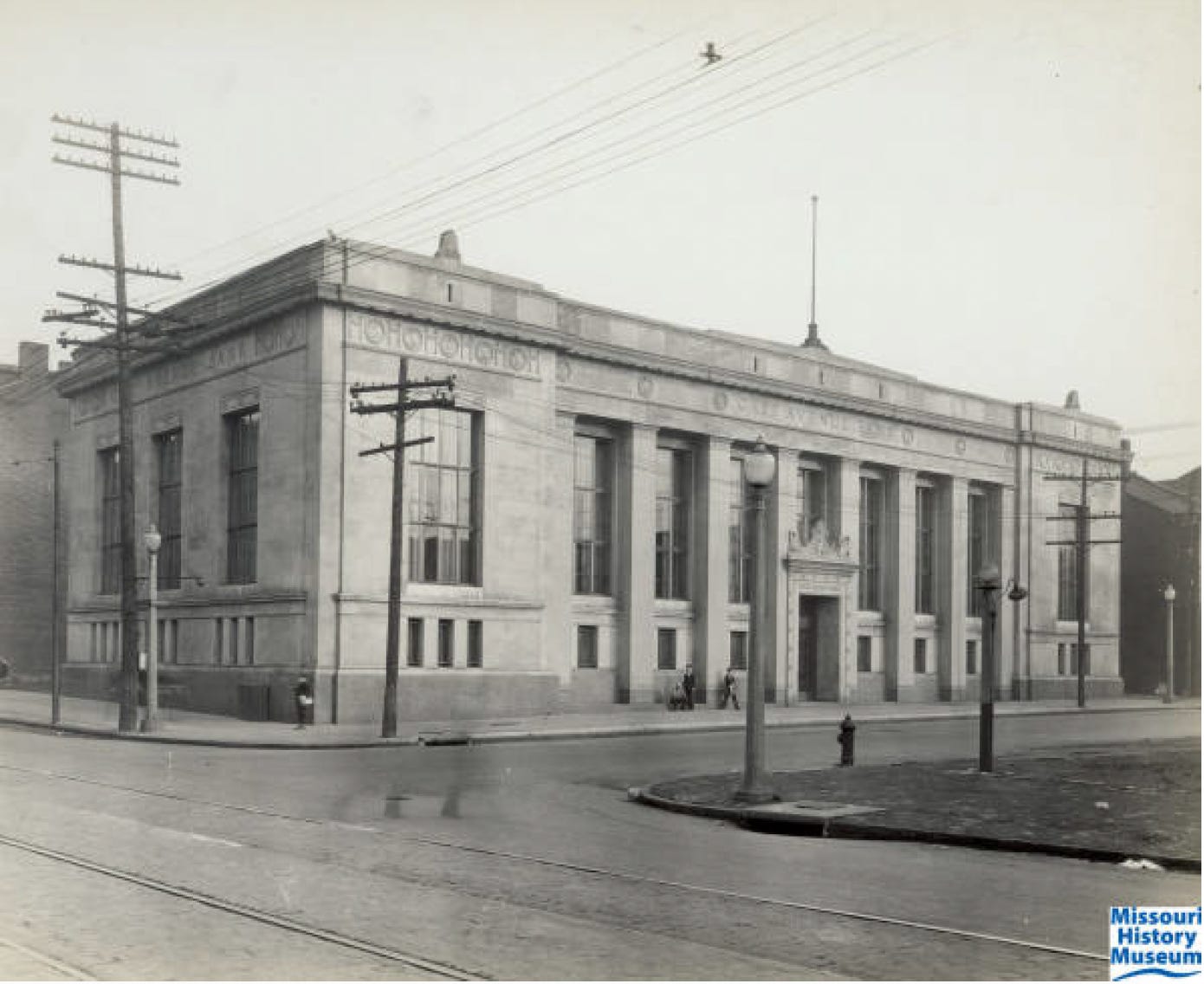
Under bank president Harry Rehme, Cass Bank moved into its new home at 1450 N. 13th Street in 1927, where it would remain for decades. In 1929, the bank became Cass Bank & Trust Company and survived the Great Depression, even as thousands of other banks across the country failed.
During the 1950s, Cass developed an innovative “Freight Payment Plan,” a service that streamlined the processing and payment of freight invoices for trucking companies. That innovation eventually transformed the company beyond traditional banking. In 1984, the payment-processing business became Cass Information Systems. Today, Cass Information Systems remains headquartered in the St. Louis region, is publicly traded on Nasdaq, and disburses more than $94 billion annually on behalf of clients worldwide. Cass Commercial Bank, now a wholly owned subsidiary of Cass Information Systems, continues to serve businesses throughout the St. Louis area and maintains a branch down the block from its historic headquarters.
The Cass Bank and Trust Building
When Cass Bank & Trust Company commissioned its new headquarters at 1450 N. 13th Street, it wasn’t simply building a larger bank. It was making a statement.
Completed in 1927, the new headquarters was designed by the Bank Building and Equipment Company, a nationally recognized St. Louis firm that specialized in bank architecture. Rather than the ornate Beaux-Arts style popular a generation earlier, the architects chose the more restrained Neo-Classical Revival style. According to the nomination to the National Register of Historic Places, the building’s broad limestone façade, monumental colonnade of eight massive columns, and carefully balanced symmetry were intended to convey the qualities every bank wanted its customers to associate with it: strength, stability, permanence, and security.
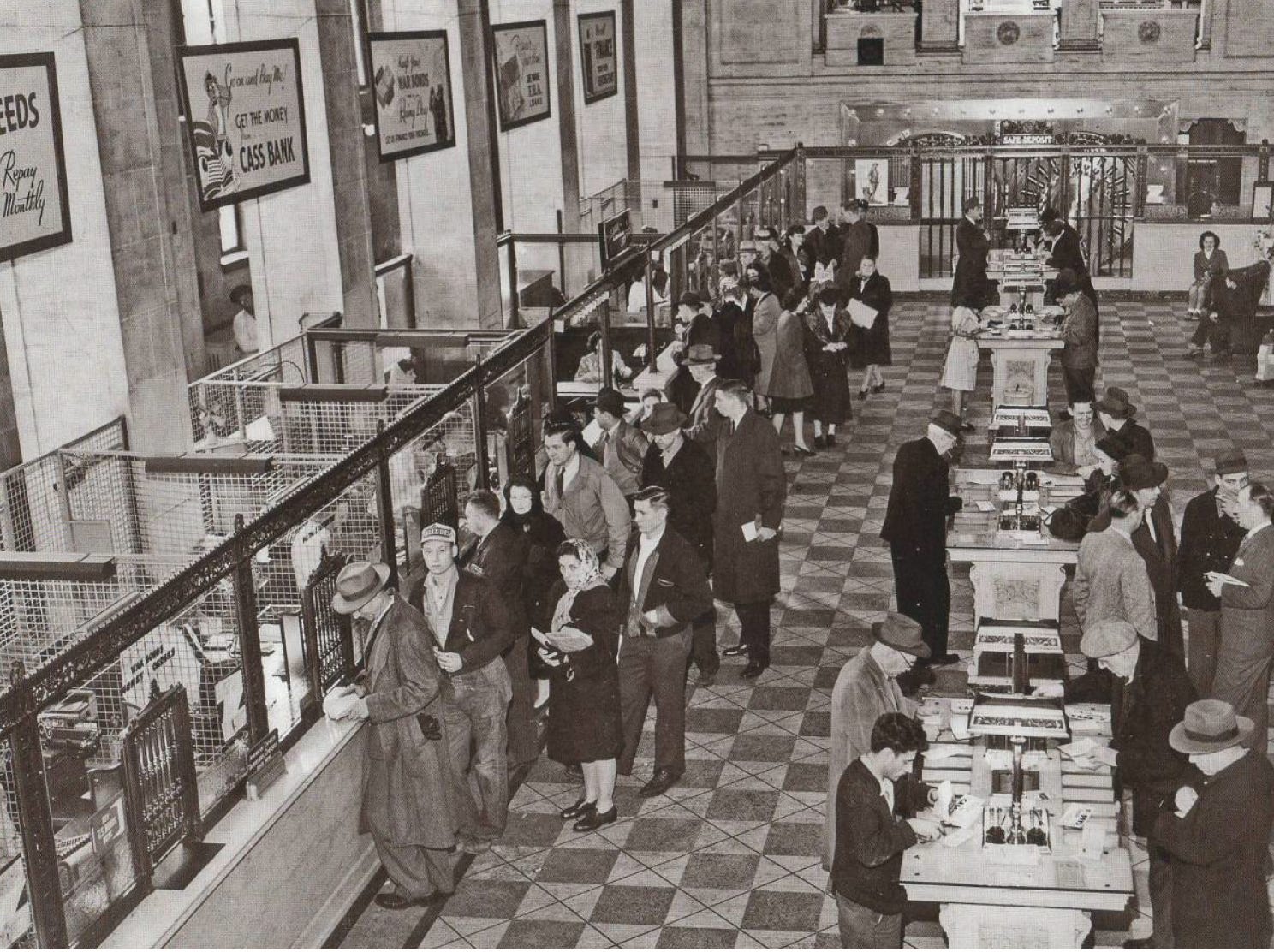
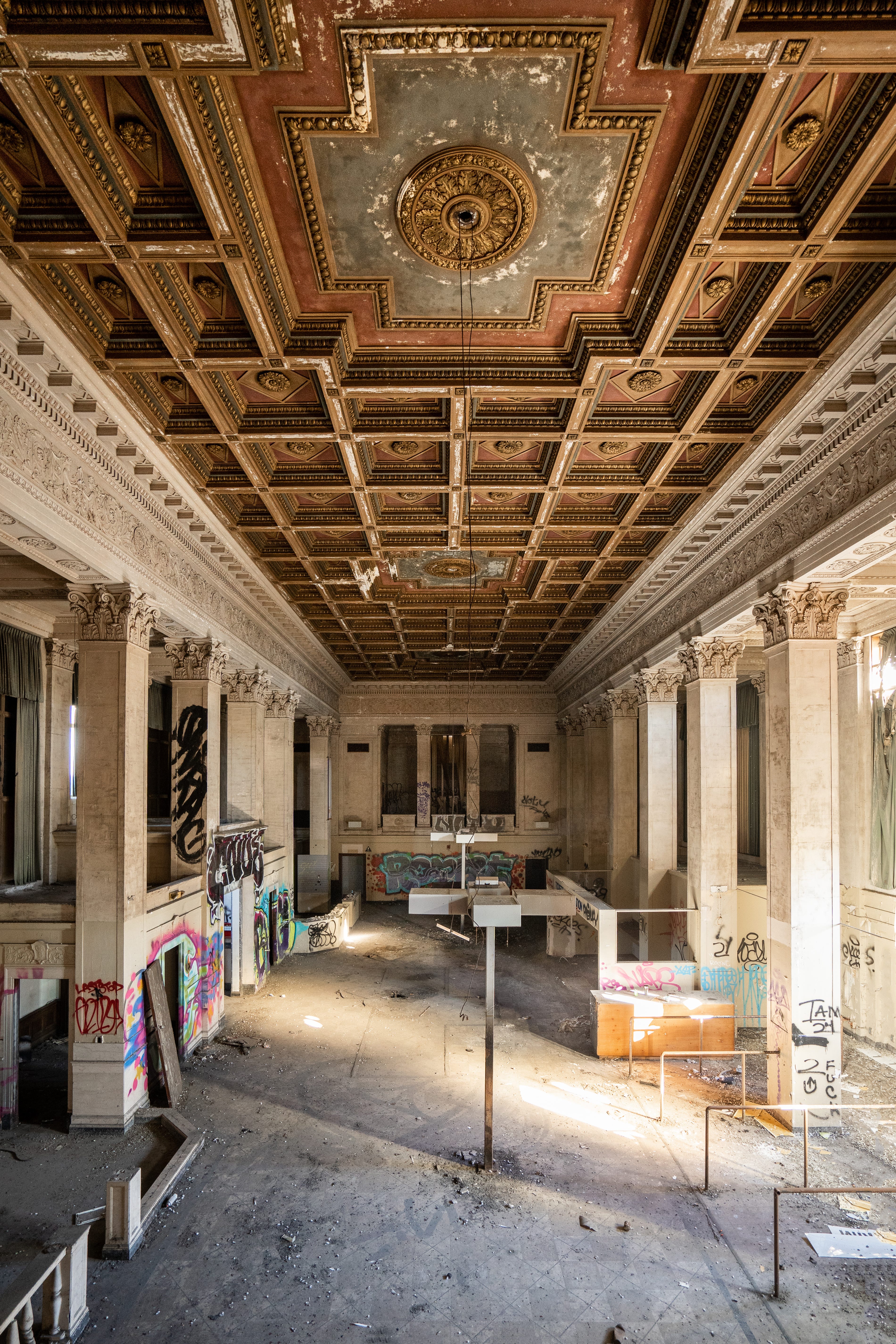
The building’s grandeur continued inside. Customers entered a soaring two-story banking hall finished with polished stone walls and floors, massive Corinthian columns, and an elaborately decorated coffered ceiling highlighted with rich colors of blue, red, gold, and green. Decorative eagles, griffins, and other classical motifs reinforced the message that this was an institution built to inspire confidence.
The building also reflected a changing moment in American architecture. While rooted in classical design, its clean lines and restrained ornament hinted at the modern styles that would soon dominate commercial architecture. It stands as one of St. Louis’ finest examples of this transitional period and one of the best Neo-Classical bank buildings designed by the Bank Building and Equipment Company, which completed more than 1,000 bank buildings across the country before World War II.
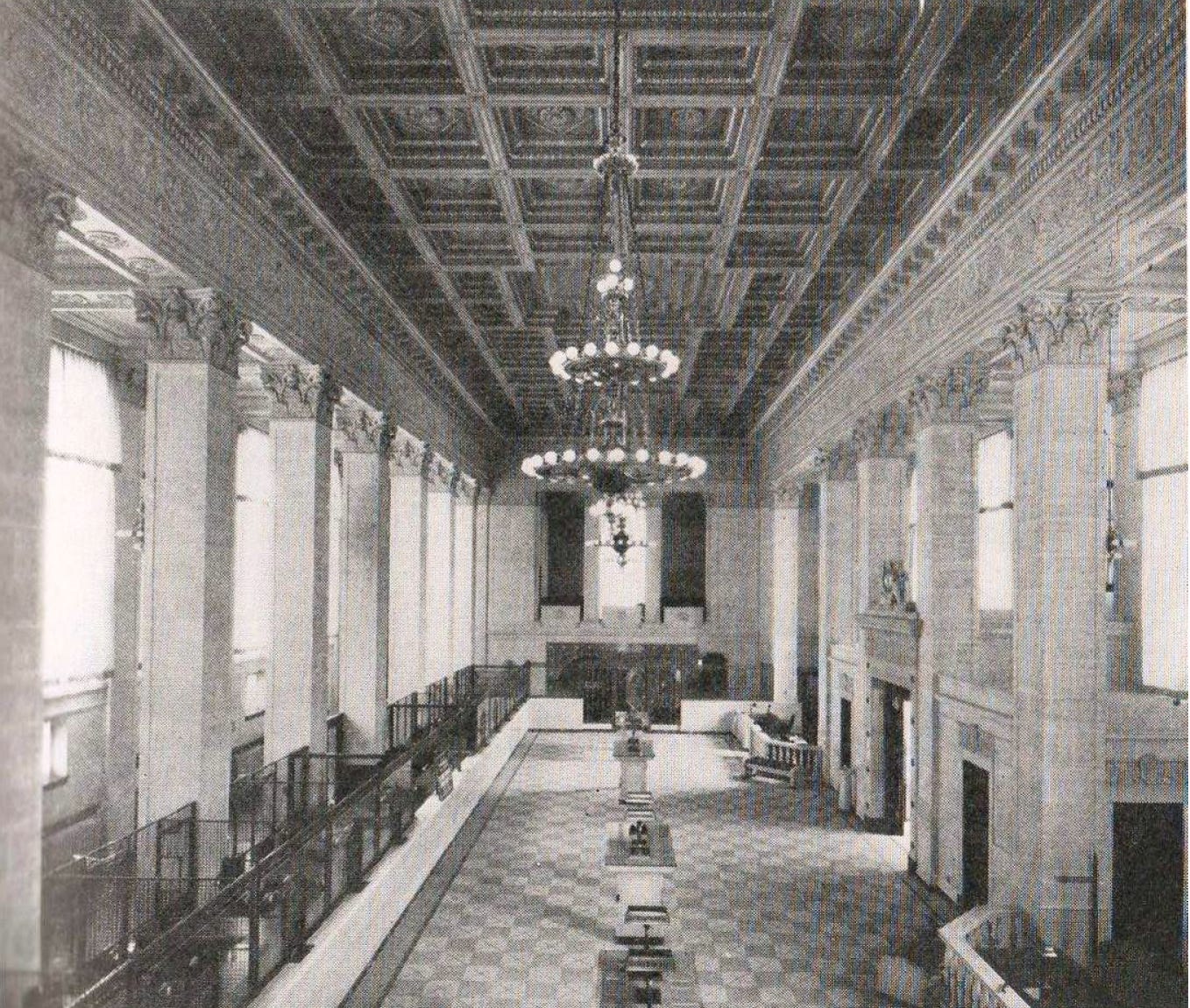
Although its role has changed over time, it still stands as a reminder of an era when neighborhood banks invested in architecture that projected confidence and civic pride.
A Bank for the Kerry Patch and Beyond
When Cass Avenue Bank opened its doors for the first time, the surrounding neighborhood looked very different from what it does today. The bank stood near the eastern edge of the historic Kerry Patch, the Irish immigrant neighborhood that grew during the mid-19th century on land once owned by the Mullanphy family. Generations of Irish families made their homes here, building businesses, churches, and a close-knit community.
By the time the new bank was completed, the Kerry Patch had already begun to transform. Many of the Irish families who had long called the neighborhood home had moved away following the expiration of the long-term Mullanphy leases, giving way first to new immigrant communities and later to Black residents displaced by the demolition of Mill Creek Valley and the effects of redlining. The construction of the interstate highways erased much of the neighborhood east of the bank, while the construction and later demolition of the nearby Pruitt-Igoe housing complex to the west further reshaped the area. Through all these changes, Cass Bank remained at the corner of Cass and 13th for decades, serving both the evolving neighborhood and its growing commercial district (and even today, there is a drive-thru branch on the same block).
Today, it’s difficult to imagine this stretch of Cass Avenue as one of the city’s busiest neighborhood business districts. Vacant lots now surround the former bank, but for decades it stood as a reminder of the hope people once had in this neighborhood’s future.
Leaving the Building to Greyhound
By 1990, after 84 years downtown, Cass Bank relocated its headquarters to St. Louis County, bringing an end to one chapter in the building’s history. But the building wasn’t done serving the city. Just two years later, Greyhound Lines relocated its St. Louis terminal to 1450 N. 13th Street after the expansion of Cervantes Convention Center displaced the company’s longtime downtown station on North Broadway.
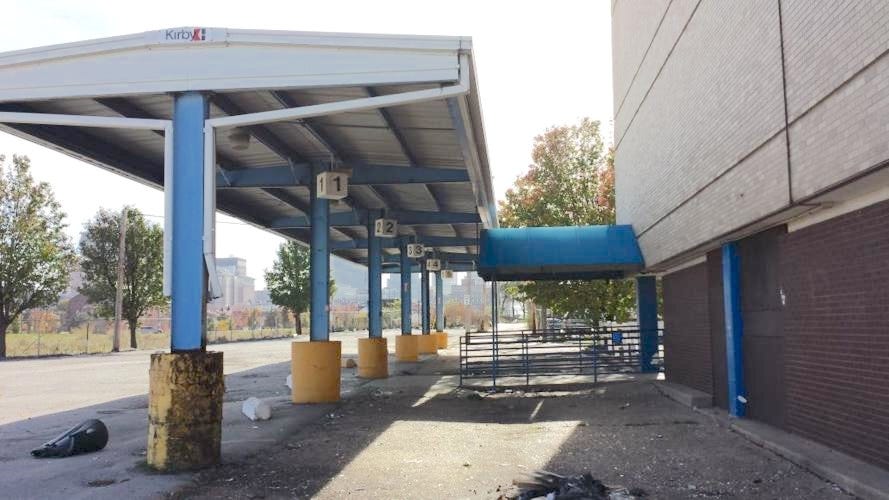
The former bank building proved to be a surprisingly practical home for the bus company. Greyhound adapted the main hall into a passenger waiting area and ticket counter, while former office space and drive-through areas were converted for baggage handling and other operations. When the terminal opened in May 1992, Greyhound handled between 800 and 1,000 passengers each day. The new station was considerably smaller than its predecessor, but company officials said it operated more efficiently and was easier to secure. With only two public entrances instead of 14, it was easier to keep out scammers and loiterers, both of which had been persistent problems at the previous terminal.
Originally envisioned as a temporary solution under a two-year lease from the City’s Land Reutilization Authority, the station remained in the former bank for nearly two decades. During that time, generations of St. Louisans came to know the building not as a neighborhood bank, but simply as the Greyhound station — a role that ultimately became as much a part of its identity as the institution for which it had been built.
Waiting for a New Purpose
Greyhound’s occupancy of the building ended in August 2008 when the company relocated its bus terminal to the new Gateway Transportation Center. Once again, the building stood vacant, waiting for someone to imagine its next life.
In 2010, Melinda Winchester of Lafser & Associates prepared the building's nomination for listing on the National Register of Historic Places on behalf of NorthSide Regeneration LLC, even though the property was still owned by the City's Land Reutilization Authority. The nomination notes that at that time, NorthSide Regeneration had the building under contract. The nomination was later approved, and NorthSide took ownership.
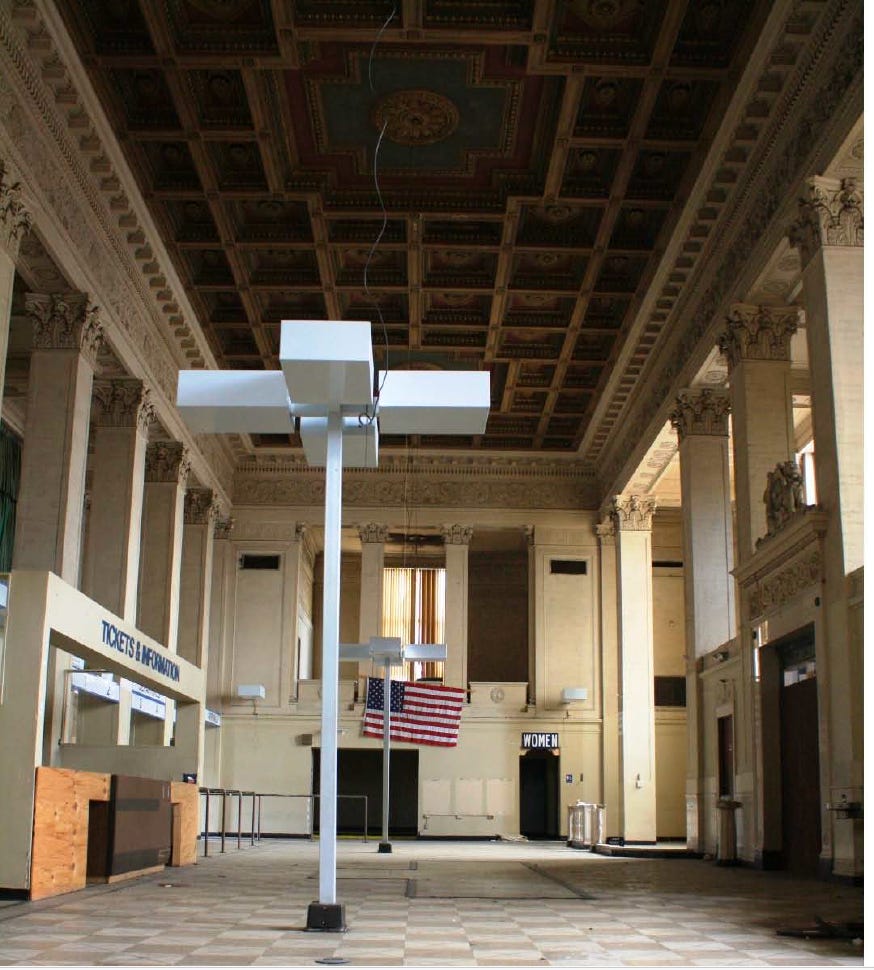
Over the years, several redevelopment proposals generated excitement but never materialized. In 2014, developers unveiled plans for Veterans Landing, a $5+ million project that would have transformed the building into a resource center for veterans and active-duty service members. The proposal envisioned a restaurant, coffee bar, ice cream parlor, business incubator, and community gathering space. The project depended on securing money to purchase the building from NorthSide Regeneration and complete the redevelopment, but that financing never materialized.
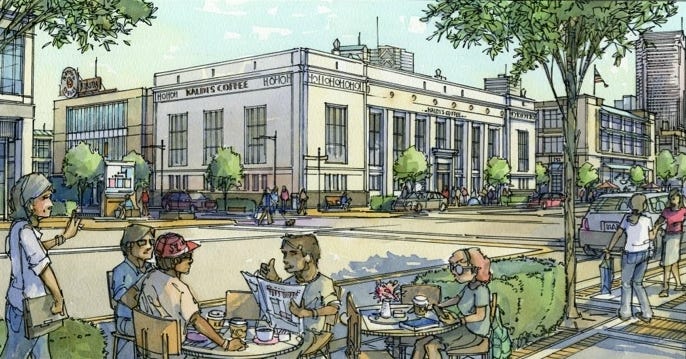
Another proposal surfaced in late 2018 and early 2019 as redevelopment around the future National Geospatial-Intelligence Agency campus at the other end of Cass gained momentum. The concept would have restored the historic bank building as part of a larger mixed-use development that included a hotel, retail space, and additional commercial buildings. Like Veterans Landing before it, the concept never progressed beyond the planning stage.
As the years passed, the vacant building continued to deteriorate. Windows were broken and boarded up, and the structure became a refuge for unhoused residents. Yet even in decline, the building remained one of the neighborhood’s most recognizable landmarks.
In 2020, St. Louis artist Cbabi Bayoc, working with Urban Strategies and Benjamin Lowder of Cherokee Street Gallery, helped give the abandoned structure a new identity.
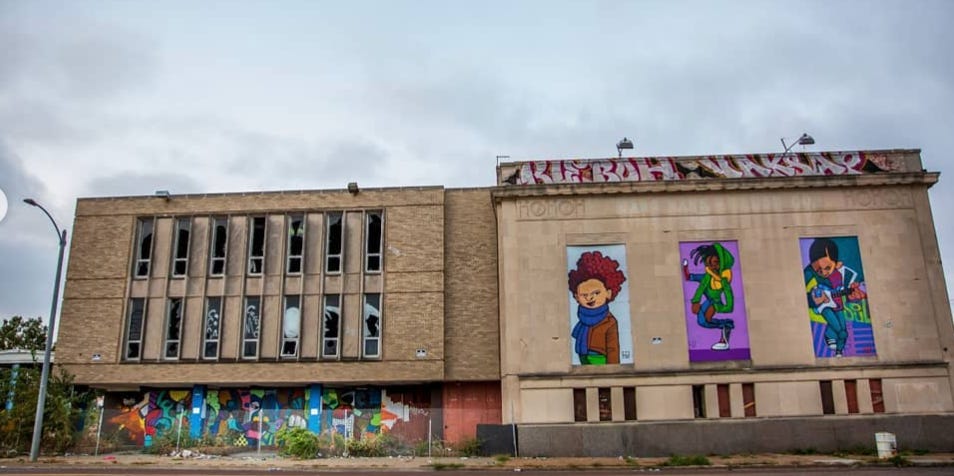
Myisa Whitlock of Urban Strategies told St. Louis Public Radio that community members had approached them about improving the building. “They wanted to see beautification,” she said. “They wanted to see these abandoned buildings secured so young kids won’t wander in these unsafe spaces.”
Together, Bayoc and Lowder created a series of eleven vibrant murals celebrating Black life and resilience on boards that would cover the large windows. Bayoc said he wanted the artwork to both stand out and reflect the people who lived in the surrounding community. As he told St. Louis Public Radio,
“Really because of where it was and all that’s been going on, I knew that I wanted all of it to be Black folks. But even in that, I wanted everybody to be able to see something different and I wanted the work to be different. I wanted it to be different than anything anybody’s ever seen.”
Bayoc said he also hoped the art would inspire those who saw it, including the people taking shelter there. He also wanted to ensure that mounting the artwork would be done with respect for the people living in and around the abandoned building.
“It was already a challenging and complicated install, but then the considerations around that, it was really people’s homes, and a group of people’s homes, who were pretty in a fragile state and position.”
Unfortunately, despite proposals to redevelop the building and later efforts to beautify it, it has now stood vacant longer than it ever served as a bus terminal. Even though it is listed on the National Register of Historic Places, it has never received the investment needed to restore and reuse it. Today, its uncertain future demonstrates a broader pattern among properties owned by Paul McKee’s NorthSide Regeneration, in which redevelopment plans too often never materialize.
And That Brings Us to Today
By the spring of 2026, the building had become the focus of growing public safety concerns. The vacant structure had long served as a refuge for unhoused individuals, and earlier this year a fire inside the building claimed one life. Violence in the surrounding area over the previous year has further heightened calls for action. Against that backdrop, the City of St. Louis condemned the building and issued an emergency demolition order.
Its owner, Paul McKee Jr., whose name has become synonymous with stalled redevelopment and abandoned properties across much of north St. Louis, responded by applying for a demolition permit. As he told the Post-Dispatch in June,
“Man, I can’t get it down fast enough.”
He blamed the building’s condition on the people who had taken shelter inside, saying, “The homeless have just destroyed it.”
It is easy to blame the people who occupied the building during its final years. It is much harder to explain why one of St. Louis’s most significant historic landmarks was allowed to sit vacant long enough for that to become possible. The people who sought shelter inside undoubtedly contributed to the building’s decline, but they did not create the conditions that allowed it to happen.
If the demolition proceeds, it will not be because this building suddenly became unsalvageable in 2026. It will be because nearly two decades passed under an owner who was unable to redevelop it while also failing to properly maintain it as it waited for a new life.
The timing is also difficult to ignore. Earlier this year, the City of St. Louis began pursuing eminent domain proceedings against several long-vacant NorthSide Regeneration properties, reflecting growing frustration with years of stalled redevelopment. Against that backdrop, the proposed demolition of one of the area’s most significant historic buildings feels less like an isolated decision and more like another chapter in a much larger story.
Having said all that, I’m encouraged that not everyone believes demolition is the answer. Neighborhood advocate Doug Eller told Fox 2 that the solution was to provide services for unhoused residents rather than demolish historic buildings, while Barbara Manzanara questioned why more dangerous structures elsewhere in the neighborhood had not been prioritized. The question on the table: Why this building, and why now?
Fourteenth Ward Alderman Rasheen Aldridge also expressed surprise at the emergency demolition order, suggesting that removing the building might simply move the activity elsewhere rather than solve the underlying problems.
A Landmark Worth Saving?
The building’s decline did not happen overnight. It followed years of vacancy, failed redevelopment plans, and deferred investment. Whatever happens next, its fate should prompt a broader conversation about how St. Louis cares for its historic landmarks before they reach a crisis point.
The former Cass Bank has already served St. Louis twice. It helped build one of the city’s oldest financial institutions, then welcomed generations of travelers as the Greyhound station. More than a century after Cass Avenue Bank first opened its doors, the building still stands, waiting for someone to imagine a third chapter.
If demolition proceeds, St. Louis won’t simply lose another vacant building. It will lose a landmark that has witnessed more than a century of the city’s history and replace it with something history can never remember: another empty lot.
If you enjoyed this article and would like to support more research like it, please consider becoming a paid subscriber to Unseen St. Louis. Your subscription helps support my efforts to uncover lesser-known stories about the history of St. Louis while keeping all of Unseen STL’s articles free for everyone to read. Thanks for helping preserve and share the history that makes our city unique.
Sources
Michael R. Allen, Cass Bank, Castle Ballroom Nominated to National Register, Preservation Research Office, October 29, 2010 (Wayback Machine link)
Kim Bell and Josh Renaud, Violence has spiked on 8 blocks north of downtown St. Louis. Are homeless camps to blame? St. Louis Post-Dispatch, June 23, 2026.
Jesse Bogan, Veterans ‘landing’ planned for old Cass Bank building near downtown, St. Louis Post-Dispatch, November 11, 2014.
Cass Avenue Bank, Built St. Louis, December 2005.
About and Since 1906. Cass Commercial Bank.
Cass Bank and Trust Company, National Register of Historic Places documentation, NPGallery Digital Asset Management System.
Chad Davis, St. Louis Artist Cbabi Bayoc Uses Murals To Beautify Abandoned North St. Louis Building, St. Louis Public Radio, October 5, 2020.
Chris Hayes, Neighbors question emergency demolition order, Fox .2, June 30, 2026
Kelly Moffitt, $5 million veterans center envisioned for former Cass Bank, St. Louis Business Journal, Nov 11, 2014.
Murals of St. Louis, Instagram post, September 26, 2020.
Abandoned St. Louis Old Cass Avenue Bank (Interior photos), Skaterbate, February 9, 2023.
Chris Stritzel, Hotel, Retail Space and Potential Cass Bank Restoration Planned at Tucker & Cass, CityScene STL, February 1, 2019.
“Transportation hub up and running - Greyhound buses begin trips out of new center Tuesday,” St. Louis Post-Dispatch, August 20, 2008.
Melinda Winchester, 1450 13th St. Application, National Register of Historic Places, July 21, 2010 (Wayback Machine link).